Thursday, May 31, 2012

Can we really not squeeze our acne spots?

I think most acne sufferers knew that they are not supposed to squueze their spots, zits or pimples. If you have been visiting a skin dermatologist, I am sure that he/she will tell you to never ever squueze your pimples, no matter how tempting you are. Right?

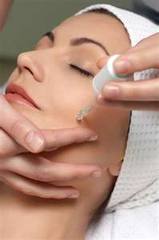
But even with this vital information, for someone who has pimples for quite some time, somehow, he/she will surely fail to fight the temptation to pop those acne spots. I guess the satisfaction in picking those pimples really put off the doctor's "no no" advice. Before I continue, can yo guess what's wrong with the picture?


So it is really a big mistake to pop those pimples? Well, if your spot is red in color, don't ever trying to pick on them. By doing so, you would cause severe and irreversible damage to the surrounding skin tissues. Furthermore, nothing will pop out as there is really nothing in it (yet) that can be squeezed out and if you press on them real hard, not only will they become bigger and redder, you would be presented with a big scar for your lifetime.

However, if your acne spots are yellowish in color, they are indeed ready to be squuezed. One way to do it is to squeeze them GENTLY with clean fingers covered by tissues at the tips. By now, I guess yo know what's wrong with the photo. The missing tissue paper!

If the pimples are really "mature" (yellowish and look like ready to pop by itself), a gentle pull of the skin surrounding the pimples (instead of squeezing it) will easily burst the pus inside the pimples. Yellowish pus will flow out from the "squeezed" pimples. To make sure the content of the pimple is emptied fully, some people give it a gentle squeeze. Here, one can see more pus which is thicker will flow out.

When red liquid flows out from the acne head, it means that blood is flowing out. So the moment you see red liquid flowing out, damage has been done to the tissues surrounding the matured acne. That is why gentle pulling and squeezing are important to ensure minimal harm is inflicted to the tender skin surrounding the hair follicles.


What would you do if you see the pus is flowing out from the spot? Soak up and dab the pus with tissue, right? Now, you know why I mentioned clean tissue earlier on. Finish off everything with a gentle small dab of tee tree oil (but never apply too much as it will definitely irritate your skin) to the affected spot area.


Contrary to popular belief, I think matured yellowish spot should be squeezed. Why? Because sooner or later, its content will be popped out. Letting nature takes its course simply means that it will "grow" into bigger size before it bursts naturally. So a bigger residue or pits will be left if we let it occur naturally. But with the act of picking, we would have pick it at a time before it grows into its full size. So the after effect "pit" will be smaller.

Ok, now some of you may ask, "What about blackheads and whiteheads? Could they be squeezed?" Blackheads can be squeezed (gently of course) but never ever do it on whiteheads.

Read more >>

Wednesday, May 30, 2012

Noticeable Pores. What you can do about it?

Most of us would feel that our pores are open an noticeable. They often look digusting and unsightly as compared to a porcelain finish skin which we all yearn. Nobody likes the look of an orange skin.


So can we do anything about them? Unfortunately, those tablets given by your GP to "treat" your acne isn't going to help in making the skin pores less prominent. Pores showing up more obvious after we suffer a round of acne problems. This happens because the area around the hair follicle has been stretched open with the solid plug known as black head which formed during the acne process.

So the pore will appear as a bigger "pit" due to the occuppation of the former blackhead and the lack of elasticity of the skin to return the skin to its original state.  With a bigger "hole", it will tend to attract more dirt and absorb more make up from its surrounding and worsen the outlook of the skin. Now you know why the bigger pores become more noticeable.

However, there are still ways to make the pores feature less prominent on our skin. Good make-up which is oil free will give us a prettier look as it will make our skin less greasy. In addition to the make-up, apply a light powder on top of the make-up and after a certain time, after your skin get used to it, the open pores will become less noticeable. Yes, make-up acts as a camouflage to hide the pores appearance. Don't think that make-up is only for the ladies as nowadays many guys go for make-up to do wonders to their skin.


If you don't know what or how to select the suitable make-up which is suitable for your skin, ask around. There are many cosmetic companies specialises in making concealers and foundations which are suitable for guys and gals.

Also, keeping your skin clean and less greasy will lessen the pores unsightly appearance. Remember earlier on, we mentioned dirt trapped in the pores will make them very obvious. So by getting rid of the dirt, we would have a more beautiful look. 


Read more >>

Tuesday, May 29, 2012

The Dreaded Acne Scar

I think the most dreaded thing about having acne is its destructive effects on our skin which can be everlasting. This presents itself in the form of scars. Some marks which we defined as scars are visible but will improve over time while others are permanent.
 
Macules, "scars" which appear as red flat marks on the spot areas can be visible for as long as 6 months while  the brown discolorations which often appear in darker skin people can last up to a year and a half. This discolorations, known as post inflammatory hyper pigmentation, happen as a result of stimulation of the inflammatory process to the skin cell pigments.


Scars happen due to the way our body repair the damage to the skin. The damage to the elastic fibres around the pores gives our skin a scar appearance after the skin repaing process.  And some of us will scar easily as compared to our friends. So it is wise to seek treatments for our acne in order to suffer the effect of acne scars which are usually more difficult to get rid off.

Keloid or hypertrophic scars comes in the form of raised scars. During the skin repairing process, our system piled up lots of collagen to the acne spots and form lumps in its place. Even though they may appear for years, some of them do vanish.

Most acne sufferers develop sunken scars which appears as pits or depression on the previous acne spots. They can be further categorised into many types.

As its name implied, soft scars are smaller and softer compared to the other scar types. They are less prominent as they normally have gentle slopes.

 Ice pick scars are more severe and even though they look fine, they are very obvious due to their jagged and steep edges. Most people have these deformations on their cheeks.

 
Depressed scars are a more severe form of ice pick scars. They are actually ice pick scars that are developed into larger pit areas. Therefore, they feature prominently on our skin.

I think atrophic patches are the least obvious acne scars that one could have. They are just flat scars; unsmooth skin due to the repairing process but at least there is no pit or depression.

Whatever acne scars we have, we will dread for it as it really changes the way we look. After all, this scars might be there for life. For some of us, even if we spend a huge amount of time, money and effort to eliminate the scars, we won't get the same porcelain look that we initially possessed. So pay attention to your acne and do not prolong treatment.     

            
Read more >>

Thursday, April 28, 2011

Are there any difference in creams, gels, lotions or foams in topical acne treatment?

The base of the product that frames the active ingredients determine how well the active ingredients are being absorbed in the skin. It can also make the active ingredients stronger or weaker. Therefore, there are indeed some differences with  products that have the same active ingredient (such as a 1% benzoyl peroxide) but come in different forms such as creams, gels, lotions or foams. 

If our skin is very oily, gels are much better for it. When the skin is dry, creams or ointment products are more suitable. Lotions and oils are usually used in the summer months where humidity is higher.

Products that are more moisturizing are normally greasier, making it unsuitable for most people as most people who have acne would normally have oily skin. Therefore, one definitely wouldn't want to put something which is greasy on one acne prone skin to treat acne.
 
 
However, a more drying product will make our skin irritated. Sometimes, a combination of more drying and more moisturizing products can be used to achieve good results as in acne treatments. As most acne treatments are drying, we recommend them to be used with moisturizers to make them less irritating for the skin to achieve an acne free complexions.

Benzoyl peroxide is known to be more active when used in the gel formulation than in other forms. However, it may be too irritating for some people. Hence the options are to use a lower concentration of benzoyl peroxide in the gel formulation, choose a higher concentration in a cream or use the cleansers in various strengths.
Read more >>

Does facial treatment help clear acne?

Don't we all love facial treatment? It gives us a feeling of refreshment and cleanse after we have one. A typical facial treatments by beauticians in salons and spas consists of cleansing, massaging, heat wrapping, extraction of blackheads and application of creams.

Simple procedures such as cleansing and extraction of blackheads (open comedones) by aestheticians are usually safe. However, in the extraction of the blackheads, the beautician normally uses a tissue paper or blackhead remover to extract the contents which can lead to redness and swelling. Furthermore, this is only a temporary improvement  to free the pores from impurities as the pore will be clogged again over the next few days.


The cream or lotion used might cause irritation to your skin. And the skills of the beauticians or aestheticians in different salons vary tremendously. An aggresive facial can leave your face worse than no facials at all.

Should you decide to have a facial, ask your dermatologist or friends who have had facials on a good beautician. Ask your dermatologist on the products that they recommend to you and try them one by one in order to minimise the chance of skin irritation and acne breakouts.

Therefore, facial treatment only clears blackheads from our faces for a few days only. We also have to be alert on the type of creams and lotions that are being used on our faces, and also on the skill of the beauticians.   
Read more >>

Wednesday, April 27, 2011

Do I need to treat my acne?

This question is often asked by people with one or two pimples at a time. Of course, the decision to treat the pimples is entirely up to each individual. Some people have many acne lesions and do not seem to mind while others are full of worries even with one pimple, especially on their nose.

Let us put it this way. If you get one new acne lesion per month with each lesion leave behind a scar, you will have 12 new scars per year. Therefore, it would be wise to treat the acne in order to prevent new acne lesions from forming and clear existing one so as to minimize the occurrence of permanent scarring.

Treating acne is definitely a lot easier than treating acne scars. And by the way, no matter what people tell you, one can never really get rid of acne scar, one can only lessen its appearance. Treatments are available to make the raised tissue around the scar flatter but I have yet to know any treatment that can raise sunken tissues effectively. And the cost of such treatment is prohibitive. So it is better to prevent the occurrence of acne scars than to treat acne scars. Therefore, it is indeed wise to treat acne from preventing any acne scar to form later on.


Wherever possible, avoid squeezing your acne lesions at this might lead to permanent scarring. Picking or squeezing at acne lesions also leads to a longer existence of your lesion and not to mention the associated pain that developed at the acne spots.

Anyway, by observing factors such as the duration and severity of your acne lesions, whether they are itchy and painful, the duration you have acne, your past response to acne treatment and the tendency of scarring and hyper pigmentation can greatly guide you in seeking treatment. It will help your dermatologist to decide the appropriate treatment for your acne condition too.
Read more >>

Why antibiotic doesn't work forever for your acne?

The typical acne treatment, especially those that are being categorized as mild and moderate acne, is by using topical medications. It can either be purchased from your local pharmacy stores either through off the shelf or prescribed by your dermatologist.

However, for those with severe acne, it seems that the application treatment gels or creams do not do anything to improve the condition of one's acne. Most of the time, acne sufferers with severe acne condition will be recommended to go for antibiotic. Normally, this is the last resort in the medication profession to treat acne, Why? Because antibiotic, such as Accutane, does has its shares of harm in treating acne . Its side effects can be devastating and that is the reason why your dermatologist will use it to treat your acne for a short term period.


Antibioitics, as with most topical treatments, not only kill off P. acnes bacteria but also other friendly bacteria such as those pro biotic bacteria in your GI tract. Antibiotics work, where topical medications failed, because they contain stronger dosage of bacteria killing effects. Even though it works, its effect is never everlasting. In most cases, acne will return after the antibiotics treatment has been stopped for some times.


You would never cured it using this method as it is only treating the symptom of your acne condition, not the cause. That being said, it doesn't mean one should not resort to antibiotic to treat one acne condition which is severe. As a temporary counter measure, yes, we should try this treatment when typical acne treatments do not show any improvement in treating acne. Furthermore, in severe case of acne, the possibility of getting acne scar if nothing is done to treat it (and please believe me, acne need to be treated, it won't go away by itself) is high and believe me, treating acne scar is much much more difficult than treating any type of acne. In short, acne scar condition is almost non reversible. One can only lessen the effect of the scar, and never to get rid of it.

Prolonged usage of antibiotics will make your acne bacteria immune or resistance to its after some time as persistent exposure to the antibiotics will make our body develop a strain of acne bacteria that it resistant to it. When this happens, it is deemed that the antibiotic is futile in combating acne.

Remember that I did mention that antibiotics not only kill P.acnes bacteria but also other friendly bacteria in your G I tract? These friendly bacteria helps a lot in assisting us to absorb nutrients from the food we take. They also prevent fungus and many parasites to occupy the linens of our digestive system. I guess you can imagine what will happen to your overall health with the prolonged intake of antibiotics (to treat your acne) that completely kill off all your friendly flora bacteria. Now, you will not only get the severe acne condition again but also get a lot of chronic infections, among others include stomach ulcers, as an overall poor health system acts as a floodgate to lot and lot of diseases.        
Read more >>